

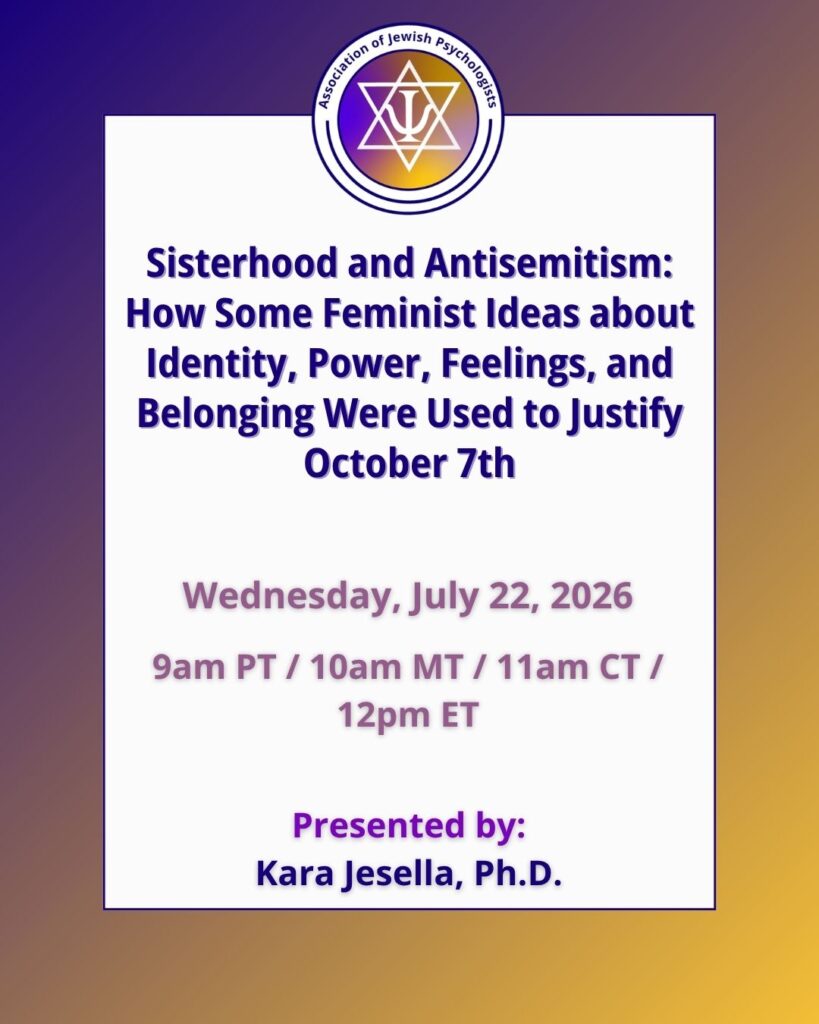
This webinar is presented by Kara Jesella, Ph.D.
Date: Wednesday, July 22, 2026
Time: 9am PT / 10am MT / 11am CT / 12pm ET
The original version of the post announcing this Webinar was briefly taken down as soon as we were made aware of how the wording of the program and learning objectives were offensive to others. It is never our intention to create harm against other individuals or communities who have been historically/currently marginalized. We know too well the effects of prejudice and bias.
We have addressed these concerns by rewording the Title and Learning Objectives.
Please note that these Webinars are not intended to be reflective of AJP’s formal policy position; rather, they are designed to provide a forum for learning and discussions of important contemporary issues of interest to our diverse membership.
Webinar length is approx 90 mins, ZOOM link will be sent in a registration confirmation email, and will be emailed directly to you a few days before the event.
From the beginning, feminism was shaped by psychology; Betty Friedan, the famous Jewish founder of second wave feminism, was a psychology PhD student who studied with Erik Erikson, and that era’s formative practice of consciousness-raising fused politics and self-help. Indeed, psychology is a field that is specially equipped to deal with feminism’s emphasis on identity; feelings, including feelings of belonging; and theories of, and different ways of enacting power, all of which have contributed to the movement’s increasingly well-known antisemitism and antizionism. Based on my book Feminist Antisemitism: An Intellectual History, published by Routledge in June 2026, this talk tells the story of how antisemitism and antizionism became central to the feminist movement and its most important theories, like intersectionality, with a special emphasis on elements of this history that are of particular interest to psychologists. It will establish the surprising antisemitism that existed even as the movement began before showing how, as different versions of feminism competed, a feminism that does not seek mainstream goals like equal rights or treatment–indeed, an antizionist feminism that justifies the horrific sexual assault of Israelis on October 7th and legitimizes the destruction of the Jewish state has become predominant. This seminar will give psychologists the background that they need to understand how radical feminism fomented hostility toward Jews; they will be able to bring their own training in these issues to the topic, which will surely allow for important new insights.
Learning Objectives
- Participants will learn about the basic trajectory of feminist experience and thought that may have led to some elements of the movement’s antisemitism and antizionism.
- Participants will be exposed to some of the basic concepts that fuel antisemitism and antizionism within some feminist and queer groups/communities, including the roles of feelings, belonging, power and identity.
- Participants will learn why some feminist theories that undergird contemporary antisemitism can be hurtful to Jews.

Sisterhood and Antisemitism: How Some Feminist Ideas about Identity, Power, Feelings, and Belonging Were Used to Justify October 7th
"*" indicates required fields
