

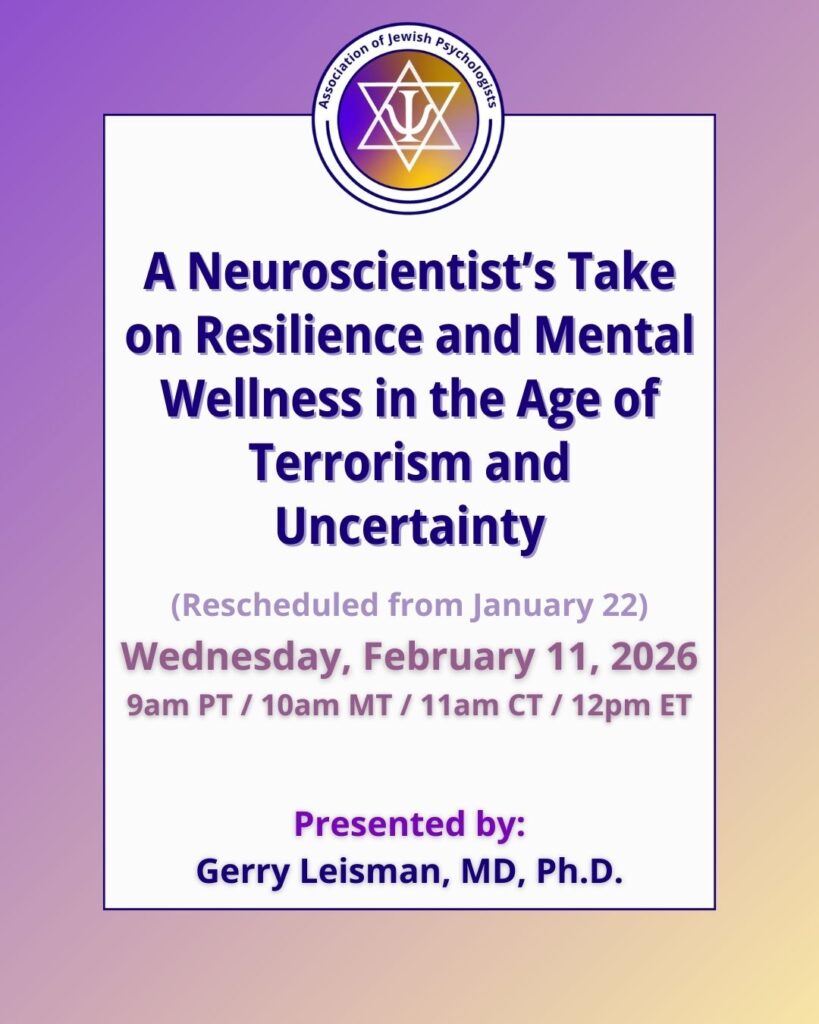
This webinar is presented by Gerry Leisman, MD, Ph.D. Professor of Neuro and Rehabilitation Science, University of Haifa and Restorative Neurology, University of the Medical Sciences, Havana, Cuba
Date: Wednesday, February 11, 2026 (Rescheduled from January 22)
Time: 9am PT / 10am MT / 11am CT / 12pm ET
Webinar length is approx 90 mins, ZOOM link will be sent in a registration confirmation email, and emailed directly to you a few days before the event.
One may be tempted to think that "mental wellness" refers to a constant state of happiness when you hear the term. But it goes beyond that. A complex dance between the human body, brain, and lifestyle is required in order to accommodate a wide range of emotions. Instead of always being joyful, the secret to mental wellness is managing the different emotions and life experiences with equilibrium.
"A state of well-being in which the individual realizes his or her own abilities, can cope with the normal stresses of life, can work productively and fruitfully, and can contribute to his or her community" is how the World Health Organization defines mental well-being. Note that happiness is not mentioned in this definition at all. Additionally, it is not described as being free from mental illness. Instead, mental well-being refers to one’s capacity to successfully manage the challenges in life, be they as straightforward as a work project or as complex as a breakup.
The idea of resilience, or the capacity to bounce back after setbacks, disappointments, and traumas, lies beneath the idea of mental wellness. It is a combination of natural, genetic, and learned traits that we develop throughout the course of our lives through experiences, education, and specialized training. And this is what this particular gathering will be focused on. The webinar will concentrate on techniques for measuring, analyzing, treating, and enhancing our coping mechanisms (or that of patients).
Learning Objectives
By the end of this presentation, participants will be able to:
- Explain the neurobiological mechanisms underlying stress, resilience, and adaptation, including the roles of neuroplasticity, functional connectivity, allostasis, and key brain regions (e.g., prefrontal cortex, amygdala, hippocampus) across development and aging.
- Differentiate adaptive versus maladaptive stress responses (e.g., positive, tolerable, and toxic stress) and describe how chronic stress alters brain architecture, emotion regulation, cognition, and mental health outcomes at individual and population levels.
- Apply evidence-based neurocognitive and behavioral strategies to enhance resilience and mental wellness, including cognitive reappraisal, mindfulness, social synchrony, sleep hygiene, physical activity, and meaning-making, particularly in contexts of uncertainty, threat, and societal stressors.

Gerry Leisman is a Full Professor and Research Fellow at the University of Haifa in Israel and concurrently Professor of Restorative Neurology at the University of Medical Sciences in Havana, Cuba. He studies the relation between movement and cognition developmentally, examining mechanisms of self-organizing systems in the brain that can be applied to fetal, neonatal, infant, and child development of sensation/perception, memory, cognition, autism, developmental disabilities, movement, and gait. He was one of the first to identify functional disconnectivities and the integration of brain networks. Functional disconnection refers to a situation where there is a lack of communication or coordination between different areas of the brain, which can impact cognitive functioning and behavior. Gerry Leisman is a notable figure in the field of neuroeducation, which combines neuroscience, psychology, and education to enhance learning processes. His work focuses on understanding how brain functions relate to educational practices and how this knowledge can be applied to improve teaching and learning outcomes.
Leisman’s research focuses on how various brain regions work together to support complex behaviors and how disruptions in these networks can lead to various neurological and psychological conditions. His work has implications for understanding disorders such as autism and other neurodevelopmental conditions.
He is a Fellow of the Royal Society of Medicine (UK), was elected Fellow of the Association for Psychological Sciences in 1990, a Senior Member of the IEEE Engineering in Medicine and Biology Society in 1986, a Life Fellow of the International Association for Functional Neurology & Rehabilitation in 2010, and its Lifetime Achievement Award in 2011. He has published hundreds of papers and texts in the Neurosciences, Developmental Sciences, Cognitive Science, Biomedical Engineering, and Systems Sciences literature.
Dr Liesman can be reached at g.leisman@edu.haifa.ac.il.
Understanding Jewish Trauma: The Therapist’s Role in Bearing Witness and Building Resilience
"*" indicates required fields
